Before GPS pins and Facebook groups made location scouting easier, photographers who documented abandoned places relied on gas station maps and word of mouth. Today, we have a powerful—and often overlooked—tool at our disposal: Flickr.
While Instagram and TikTok dominate the social media conversation, Flickr remains an absolute treasure trove for photographers researching abandoned locations. The platform hosts millions of high-quality images, many uploaded by serious photographers who’ve been documenting abandonment for over a decade. More importantly, Flickr’s metadata-rich structure and geotagging features make it uniquely suited for location research.
Here’s how to use Flickr effectively to find your next abandoned photography destination.
Why Flickr Works for Location Research
Unlike algorithm-driven platforms that surface whatever’s trending, Flickr’s architecture rewards specificity. Every photo can contain detailed metadata including location coordinates, tags, descriptions, and EXIF data. Photographers on Flickr tend to be more thorough in their documentation—they’re archivists as much as artists.
The platform also has a long memory. Photos uploaded in 2008 are still searchable and often still geotagged, giving you access to locations that might have been demolished or transformed since but that still inform your research.
Step 1: Master the Search Bar
Start simple. Go to Flickr and type your search terms in the bar at the top. But think like a photographer, not a tourist.
Effective search terms for abandoned places:
Instead of generic terms like “abandoned building,” try:
- “urbex” + [state or region]
- “abandoned” + [building type] + [location]
- “ghost town” + [state]
- “rural decay” + [region]
- “derelict” + [specific structure type]
For example, searching “abandoned church Montana” or “urbex Montana” will return more targeted results than broad searches. You can see an example below.
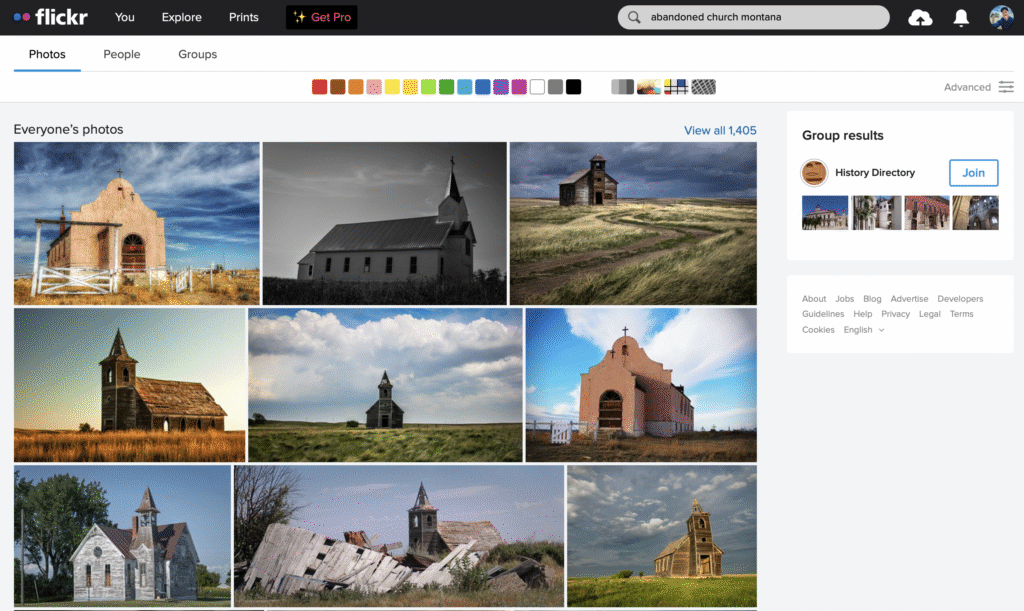
Use quotation marks for exact phrases. Searching “abandoned church” (in quotes) returns photos specifically tagged with that complete phrase rather than images containing both words separately.
Try alternate terminology. Photographers tag their work differently. If “abandoned” doesn’t give you enough results, try:
- “derelict”
- “decay”
- “forgotten”
- “ruins”
- “forsaken”
- “vacant”
Step 2: Use Advanced Search Filters
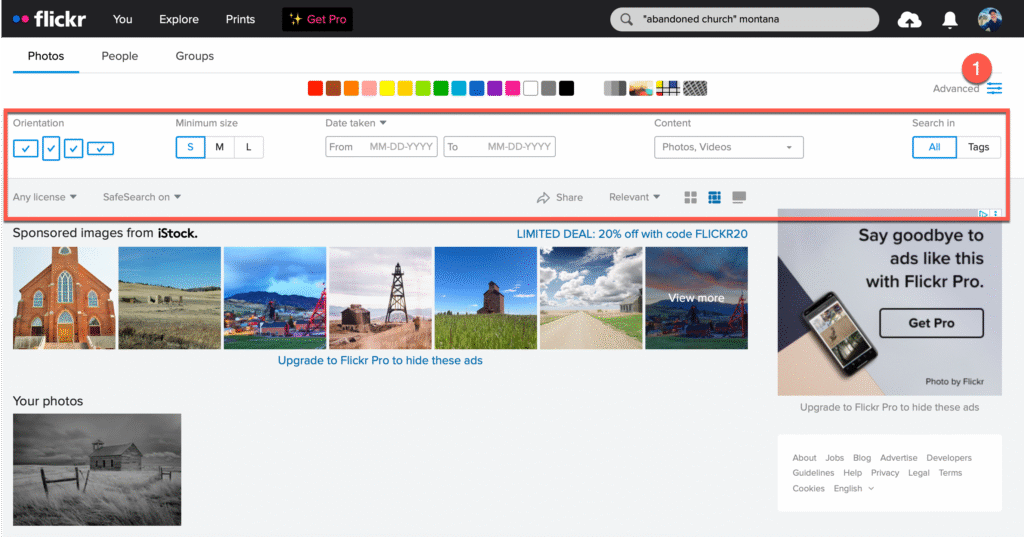
Once you run a search, Flickr offers powerful filters on the right side of the results page. These are crucial for refining your research.
Date filters: You can search by when photos were taken or uploaded. This helps identify locations that have been documented recently versus years ago—important for knowing if a structure still exists.
Sort options: Switch between:
- Relevant — Flickr’s default algorithm
- Interesting — Surfaces highly-engaged photos
- Date Uploaded — Newest first
- Date Taken — Shows when the photo was actually captured
Orientation filters: If you’re planning a specific shoot, filter by landscape or portrait to see how other photographers have approached the space.
Search in: You can limit searches to tags only or expand to include descriptions and titles. Starting with tags-only searches often yields more precise results.
Step 3: Explore Groups—The Real Gold Mine
Flickr Groups are where serious photographers share their work with communities of like-minded enthusiasts. These groups are organized by theme, location, or building type, making them invaluable for location research.
How to find groups: After running a search, click “Groups” in the upper left corner of the results. You’ll see hundreds of groups related to your query.
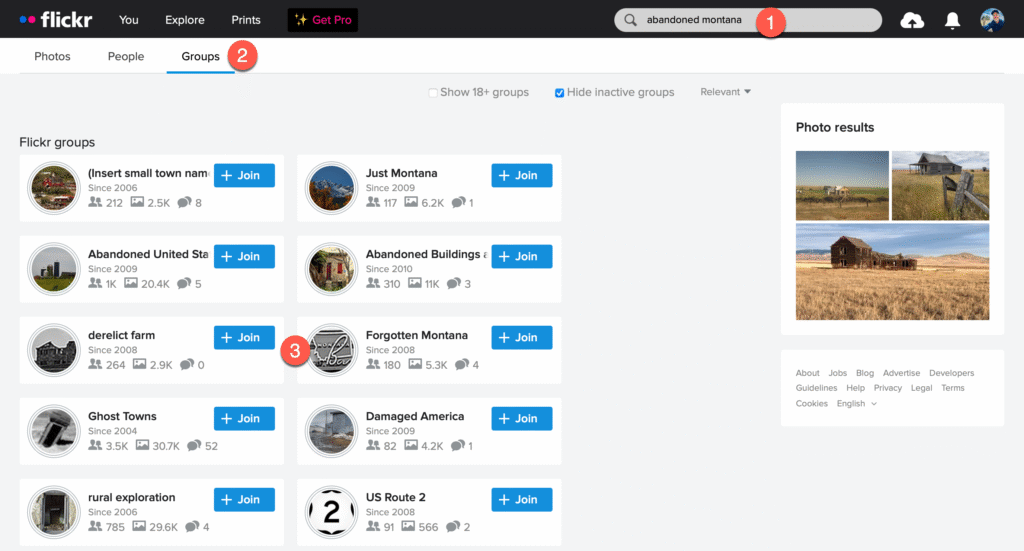
Essential abandoned places groups to join:
General Urbex Groups:
- Urbex :: Urban Exploration — Focused specifically on interior exploration of abandoned structures
- Urban Exploration – Exploring Abandonments — Active community with strict quality standards
- Abandoned — Broad collection of abandoned places and objects
- Abandoned Places and Things — Houses, schools, cars, and miscellaneous structures
- Abandoned Buildings — Hospitals, churches, ruins, and destroyed structures
Location-Specific Groups:
- Urbex UK — Excellent for European locations
- Twin Cities Urban Exploration — Factories, grain elevators, tunnels
- Regional groups exist for most states and countries—search “[your region] urbex” or “[your region] abandoned”
Building Type Groups: Flickr has dedicated groups for specific structure types including theaters, asylums, gas stations, factories, churches, farms, malls, and even more granular categories like abandoned furniture or peeling paint.
Group etiquette: Many groups have active discussion forums where members share experiences, ask for location recommendations, and sometimes coordinate visits. Introduce yourself, show genuine interest in preservation and photography, and you’ll find members more willing to share information privately.
Step 4: Leverage Geotagging—The Secret Weapon
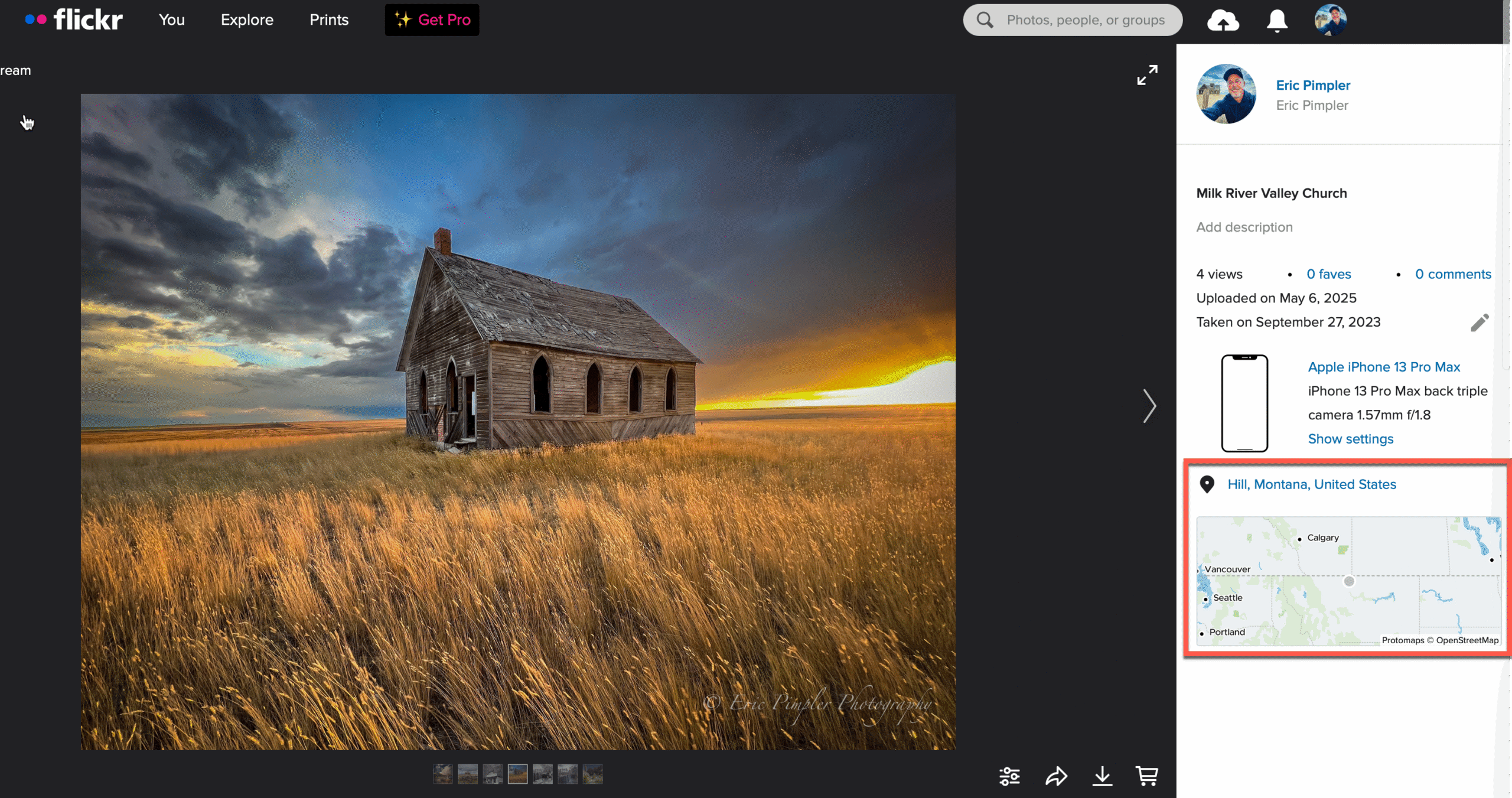
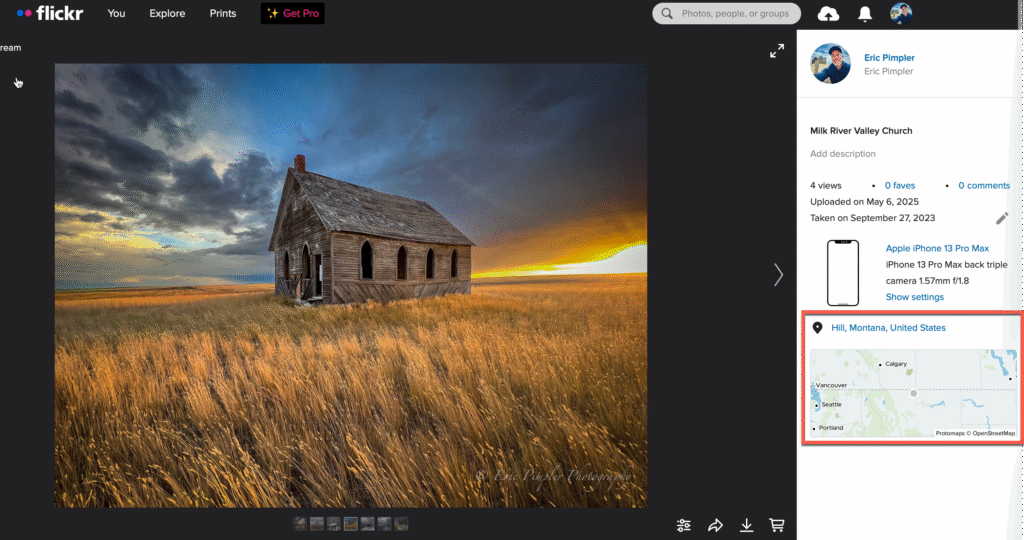
This is where Flickr becomes exceptionally powerful for location research. When photographers upload images with GPS data enabled—or manually add their photos to Flickr’s map—you can see exactly where images were taken.
How to find geotagged photos:
- Run your search as normal
- Look for photos that show a location indicator
- Click on the photo, then look for the map link or location information in the photo details
- Click to see the exact location on Flickr’s map
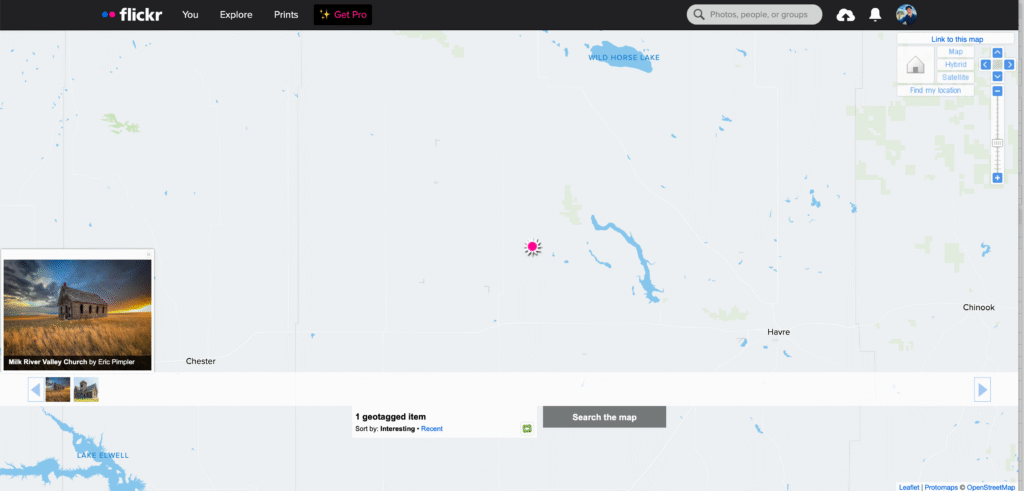
Explore the World Map: Flickr has a dedicated World Map feature (flickr.com/map) where you can browse photos by location. Zoom into your region of interest and look for clusters of abandoned building photographs.
Important note on privacy: Many experienced urbex photographers deliberately don’t geotag their photos to protect vulnerable locations from vandalism or overcrowding. Respect this choice. If someone hasn’t shared location details, they have their reasons.
Step 5: Study Photographer Profiles
When you find images of locations that interest you, don’t just look at individual photos—explore the photographer’s entire profile.
What to look for:
- Albums/Sets: Many photographers organize their work by location or trip. An album titled “Montana Ghost Towns 2023” might contain dozens of locations.
- Other photos from the same date: Look at what else they shot that day. Photographers often visit multiple locations in a single trip.
- Tags they use: Notice their tagging patterns. If they tag one photo with a specific town name, check their other photos with that same tag.
- Profile location: Photographers based in your target region likely have extensive local knowledge.
Building connections: If a photographer’s work consistently appears in your searches, consider reaching out via Flickr mail. A polite message appreciating their work and asking if they’d be willing to point you toward accessible locations can lead to valuable information—though always respect if they decline to share.
Step 6: Cross-Reference with Other Tools
Flickr works best as part of a larger research workflow.
Pair Flickr research with:
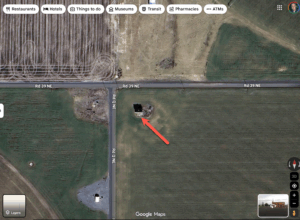
- Google Maps/Earth: Once you have a general area from Flickr, switch to satellite view to identify specific structures
- Historical newspaper archives: Location names found on Flickr can help you dig into local history
- County assessor websites: Some locations can be verified through property records
- Local historical societies: They often know about abandoned structures in their areas
Use Flickr to verify other sources: Found a location mentioned in a YouTube video or Facebook group? Search for it on Flickr to see current conditions, access points, and photographic potential.
Practical Search Strategies by Building Type
Abandoned Schools: Search “one room schoolhouse” + [state], “abandoned school” + [county], or “rural school” + [region]. These are common across the American West and Midwest.
Churches: Try “abandoned church” + [state], “derelict chapel,” or specific denominations like “abandoned Lutheran church prairie.”
Grain Elevators: Search “abandoned elevator” + [state], “ghost town elevator,” or simply “grain elevator” + [prairie state]. Many photographers document these iconic prairie structures.
Farmhouses and Barns: “Abandoned farmhouse” + [state], “derelict barn,” “rural decay” + [region]. For specific architectural styles, add terms like “Victorian” or “homestead.”
Industrial Sites: “Abandoned factory” + [city], “derelict mill,” “urban decay” + [rust belt city]. Industrial photography is particularly well-documented on Flickr.
Ethical Considerations
Finding locations is only the first step. How you approach them matters.
Respect the urbex code:
- Take nothing but photographs
- Leave nothing but footprints
- Don’t share specific location details for vulnerable sites
- Never break in—if a building requires forced entry, move on
Protect what you document: If you find a pristine location through Flickr research, think carefully before broadcasting its exact location. Some places survive precisely because they’re not widely known.
Give credit: If someone’s Flickr research helped you find a location, acknowledge that contribution in your own work.
Building Your Own Flickr Presence
As you document abandoned places, consider contributing back to the community that helped you find them.
Best practices for your uploads:
- Use descriptive, searchable tags
- Include location information at an appropriate level of detail (region or county rather than exact coordinates for sensitive sites)
- Write descriptions that provide historical context
- Join relevant groups and contribute to discussions
The abandoned places photography community thrives on mutual support. The more thoughtfully you participate, the more others will be willing to share with you.
Final Thoughts
Flickr isn’t as flashy as newer platforms, but for photographers serious about documenting abandoned places, it remains unmatched. The combination of high-quality imagery, detailed metadata, geotagging capabilities, and active specialized groups creates a research resource that no other platform can replicate.
Spend an evening exploring Flickr’s abandoned places groups, and you’ll likely find locations you never knew existed—even in regions you thought you knew well. The photographers who came before us have done remarkable work documenting structures before they disappear. It’s our privilege to build on their efforts and continue that preservation work.
Happy researching—and happy shooting.